
Three things I didn't know about self-publishing
(And why I've made a course about it.)

I am one of the fortunate minority who has had traditional publishing contracts with Big Five publishers. That was then: between 2005 & 2012.
I was dropped by my publishers when my editors left, and because I was a midlist author with so-so sales. A common enough story.
The trouble was, I still had stories to tell. I was in no way finished with being an author. My agent did his best to sell my work after that, but—as others might know—bad BookScan numbers follow you around like a bad credit rating.
So I decided it was time to indie publish. How hard could it be?
Turns out, it’s not hard to self-publish a book.
I went back and forth between paying the price to work with hybrid publishers and doing it myself. There are pros and cons to both (which I’ll be exploring in the workshop I’m teaching on March 7).
However, when I made the shift to genre fiction—Regency romance, to be exact—I realized that the way to go was either get a juicy contract with a big publisher or completely self-publish. Unfortunately, in my usual way, I seem to have missed the trend boat, and publishers are now steering clear of historical romance for various reasons so that route was a no-go.
Which left self-publishing.
I’d done it before with tepid results. This time, I decided to approach the launching of my Double-Dilemma Romance series with more intention.
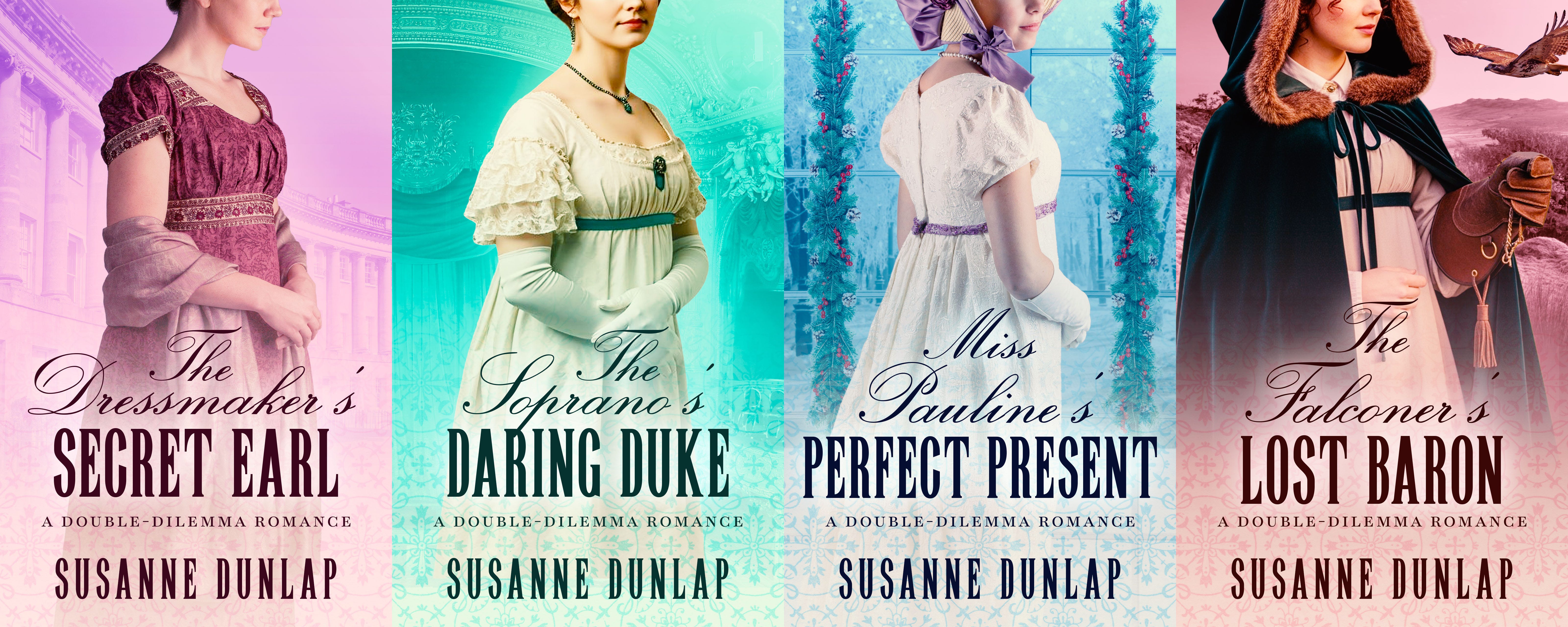
First thing I didn’t know: publishing your own books is a whole separate business.
I already had a business as a book coach and editor. But research and observation showed me that to be successful in the self-publishing arena required a business mindset, a commitment to cultivating my audience and putting my books out there in ways I never had before.
I made a publishing imprint: Comfortable Prose Publishing. No LLC, just a statement of intention. A way to make my romance books claim space in my already crammed life. (And a sly Regency nod…)
I discovered that putting out a worthy book myself required a great deal of work, not just in the writing and editing, but in the positioning and marketing.
I redesigned my website. I hired a cover designer. I wrote some promotional copy. I researched ways to get my book in front of the readers who might like it. These efforts now take up about half my working time in a given week. And it’s ongoing.
Second thing I didn’t know: control isn’t just an ego thing.
When my books were traditionally published or even hybrid published, the book was completed, formatted, and published—with a blurb, categories and keywords (I assume), pricing etc. and once those were all established, they became more or less etched in stone.
This is not the way to approach the volatile world of publishing genre fiction.
I soon discovered that if I wanted to change the price of a traditionally or hybrid published ebook, it was a convoluted process that wasn’t a priority for the publishers, who were focusing on the new books they were putting out (no blame attached to them for that).
If I wanted to change the blurb on Amazon—even less of a priority.
As to adjusting keywords or making sure the books sat in the right categories… My publishers were certainly not going to contact Amazon in order to fix something that could deeply affect ranking. For instance, these are the categories where my first historical novel, Émilie’s Voice, currently sits:
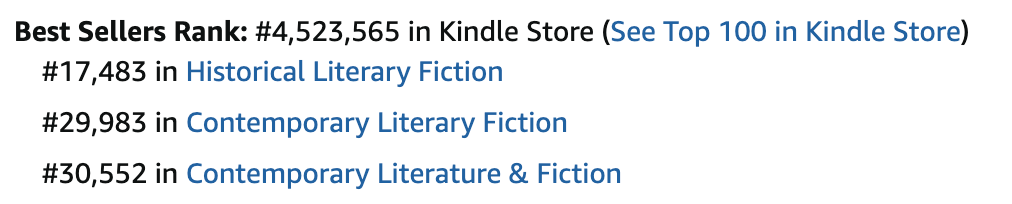
Um, aside from the fact that it was published more than twenty years ago, there is nothing about this novel set in the court of Louis XIV that is contemporary. And Historical Literary Fiction is so broad as to be nearly meaningless.
As to keywords: Since I have no access to the backend, I also have no idea what keywords were assigned to this book back in 2005 when it was published.
The bottom line: If someone were looking for a historical novel with musical themes that took place in Paris in the 17th century, this one wouldn’t even be on their radar.
Having control of all of those factors can enable you to test different options, which could have a direct effect on discoverability and search results. But—here’s the kicker—you actually have to do it intelligently.
Third thing I didn’t know: what you do before you hit publish has as much to do with your book’s success as efforts after that.
This is especially true for genre fiction. Not just romance, but mystery, thriller, horror, fantasy, etc. That’s because you’re trying to reach an audience that is looking for very specific reading experiences and who have very specific reader behaviors.
And this is quite apart from making sure the manuscript you’re going to publish pushes all the necessary buttons for readers in your genre and sub-genre.
I’m not going to go into all those decisions you have to make (wide vs. narrow distribution; available formats; timing; pricing), but trust me: you ignore their importance and the thought you need to put into them at your peril.
The good news is that many of those decisions can easily be adjusted if you have complete control over publishing your books. That’s as it should be in the world of online access to everything.
All this hard-won experience and expertise is in my new course: Publishing Without Panic.
I’m a teacher at heart. It’s in my genes. When I figure something out and collect the data and deepen my comprehension, my instinct is to put it together and offer it to others who will (I hope) find it helpful—and avoid the years-long learning curve I’ve had to follow.
So I made an online course. You can read more about it here.
If you want to indie publish your genre fiction, I encourage you to take a look at the course. It’s designed so you can use the resources over and over as you publish your series.
And if you do it well, indie publishing can be both fun and rewarding. A lot of work, yes, but it’s so satisfying when you see that something you tweaked has had a positive effect, or that the promotion you’re running has resulted in catapulting you to #1 in a category.
It’s a different way of thinking, but if you embrace it, it can help you carve out a satisfying career as an author.